ILR Consultation: A Divided Response
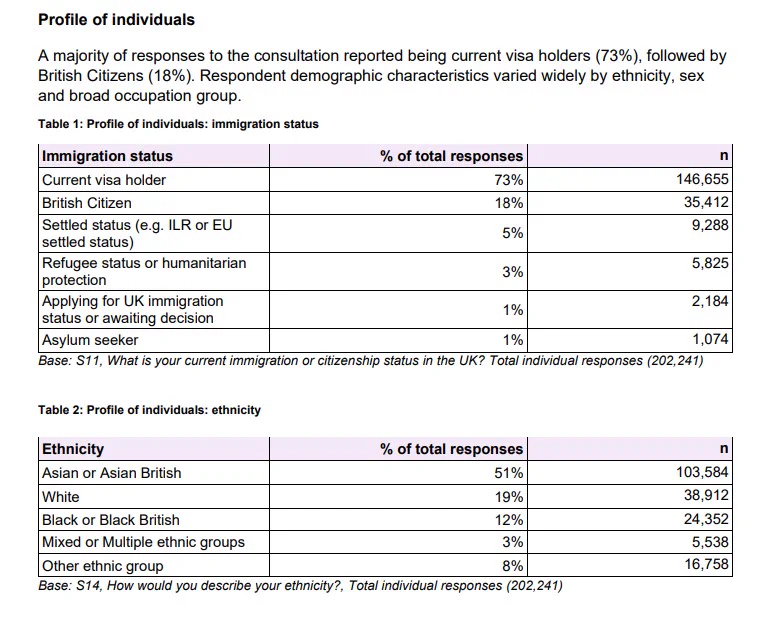
In a recent Twitter post, Jack Rankin MP brought attention to the government's ILR consultation, revealing that only 18% of respondents were British citizens. This revelation has sparked a lively discussion on the role of migrants' opinions in shaping policies that directly impact their lives.
The Consultation and Its Respondents
The ILR (Immigration and Legal Rights) consultation aimed to gather feedback on proposed changes to immigration policies. As expected, migrants with a direct stake in the outcome were more likely to participate. One commenter pointed out, "This looks like it was a consultation. It's not a surprise that people with direct skin in the game reply."
Weighing Opinions
The debate centered on the weight given to the opinions of British citizens versus those of migrants. Some argued that the government's responsibility is to prioritize the views of its citizens, as expressed by a commenter: "The government's responsibility is to listen to its citizens, not foreign citizens responding to a consultation."
However, others acknowledged the value of understanding the potential impact on migrants' behavior, especially when considering long-term residents and high-earners. As one commenter suggested, "Should we understand how non-doms would react to a change and tweak policy because of it?"
The Government's Role
The discussion also touched on the government's ability to control who participates in consultations. While some suggested measures like ID requirements, others noted the internal pressure within the Labour party that influenced the policy changes. A commenter remarked, "The government can't decide who fills out its consultation form... it's strange to pretend otherwise."
A Complex Issue
The ILR consultation highlights the complexities of policy-making, especially when dealing with issues like immigration that affect diverse groups. As one commenter humorously put it, "This is a crazy attitude. It’s like doing a consultation on custodial sentences, polling prisoners, and then deciding government policy based on that."
The debate surrounding the ILR consultation underscores the need for a balanced approach, considering the opinions of all stakeholders while prioritizing the well-being of British citizens. As the discussion continues, it remains to be seen how the government will navigate these complex waters.
